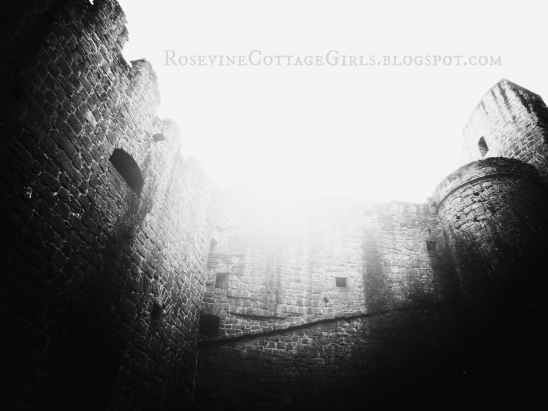
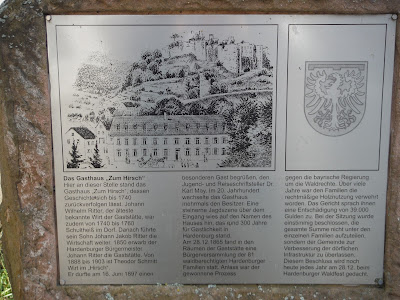
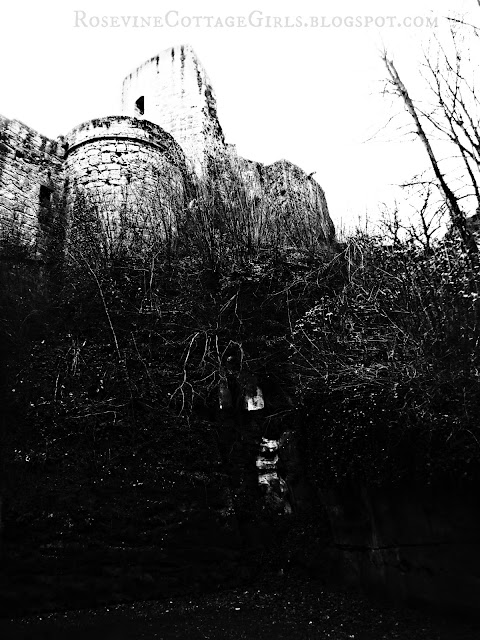
Welcome back to Germany, Today we finish our journey in the Bad Durkheim area. After leaving the monastery we made our way to another set of ruins, Hardenburg Castle. She sits high above the town on a hill on the eastern edge of the Palatinate Forest near Bad Dürkheim, Germany.
Hardenburg Castle is one of the largest castle ruins in the western Rhineland-Palatine area. The Castle was constructed by the counts of Leiningen-Hardenburg, on land belonging to the Benedictine monastery at Limburg (Cloister ruins Limburg Monastery) a few miles away (The ruins we just left) when count Freidrich of Leiningen was granted governorship of the abbey by King Phillip of Swabia in 1205.
As you walk along the grounds it whispers to you of the stories it holds and in the back of your mind, you can almost see knights in armor and ladies in beautiful gowns that must have walked these ancient paths and hallways.
The earliest count of Leiningen I could find any information on was Emich II who died before the year 1138 AD. This line died when Count Frederick died without male heir. Frederick’s sister Liutgarde then married Simon II the count of Saarbrucken. Liutgarde then had a son she named Frederick and he inherited the lands of the counts of Leiningen and also took their name.
This family in the middle ages was the second most powerful ruling family in the area next to the Palatin Counts of the South Rhineland-Palatinate.
In the 16th century, the castle was added on to and became a great fortress. There are only remnants of an upper wall to show the existence of the castle itself today.
In 1690 French troops captured and occupied the castle during the Palatinate War of Succession (1688-97). Which was waged between Louis XIV of France (after his invasion (1688) of the Palatinate) and the Grand (Britain, the Netherlands, and Austria) the first major engagement began when Louis XIV’s army crossed into Rhineland in September 1688. They laid siege to Philippsburg and after a month it finally fell. The army quickly overtook many key cities in Palatinate including Worms, Kaiserslautem, Mainz, Heidelberg and Manheim. But this as far as they would go, The German princes met in Magdeburg on the 22nd of October and united their armies against the invaders.
Rather than fight a protracted war on German soil Louis XIV retreated, burning all the main cities and towns in their wake to the ground or destroying them. The German forces finally reached the Palatinate in 1689 laying siege to Mainz on July 22nd. The French surrendered on September 8th.
During this time some of the outer works of the castle were destroyed. In 1725 the ancestral seat moved from Hardenburg Castle to Bad Dürkheim, where they had already started to build a new castle that would include a theater, royal stables, barracks and a pleasure garden. On March 29th, 1794, French revolutionary forces returned and attacked Hardenburg Castle this time they burnt it down. All the furnishings and equipment were destroyed and the western bastion was blown up.
Pin For Later
In the first part of the 19th Century, the castle was robbed of most of its building material. Since 1947 the castle has belonged to Rhineland-Palatinate. In the 70’s, 80’s and early 90’s the castle was restored, so that visitors could visit the ruins safely.
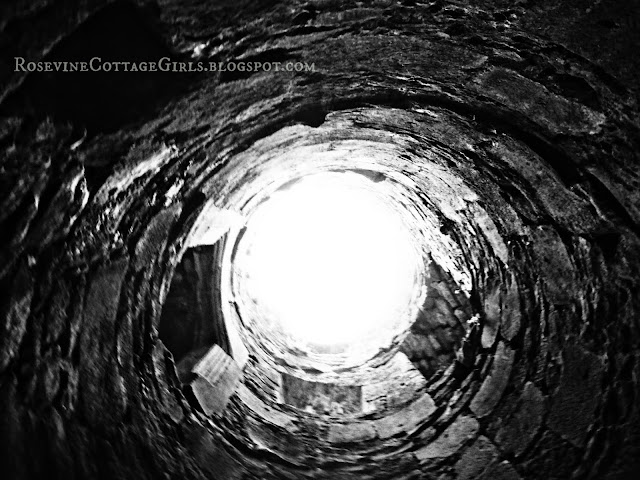
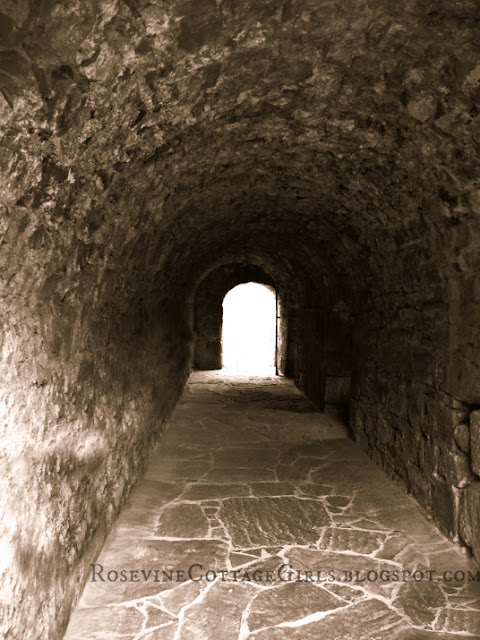
Walking thru the ruins and seeing the thickness of the walls and the size of it all makes you wonder what it took to build it. Carrying water and the rocks itself had to be a great undertaking.
In 1933- 184 Jewish people lived in the area, by the time 1938 rolled around only 40 remained due to the economic boycott and dehumanization by the Nazis. During the Kristallnacht (Crystal Night) or Night Of Broken Glass in 1938 (It was called this because of the price of all the broken glass in looted Jewish shops $1,250,000) the synagogue was ransacked.
The instruction for the destruction of Jewish homes and businesses were teletyped to all SS headquarters and state police stations, The local police were told not to interfere with the rioting, and as many Jews as possible were to be arrested to be deported to concentration camps.
In Reinhard Heydrich’s report to Hermann Goering after the Night Of Broken Glass, the damage was evaluated to be: “…815 shops destroyed, 171 dwelling houses set on fire or destroyed… 119 synagogues were set on fire, and another 76 completely destroyed… 20,000 Jews were arrested, 36 deaths were reported and those seriously injured were also numbered at 36…” Later estimates were that as many as 7,500 Jewish shops were looted, and there were several incidents of rape. (The rapists were thrown out of the Nazi Party and handed over to the police for prosecution while those responsible for the murders could not be punished because they were following orders.
Insurance companies went nearly bankrupt after the Night of Broken Glass due to all the claims, to resolve this Hermann Goering came up with a “solution”. Insurance money due the victims of Kristallnacht was to be confiscated by the state a part of it funneled back into the insurance companies to keep them afloat.
In October 1940 the 19 Jews still remaining here were deported to Gurs Concentration camp in southern France. The camp was originally built to house Republican refugees fleeing from the Spanish Civil War, later it held refugees fleeing persecution from Nazi-occupied Germany and Austria. When France surrendered to the Nazis in June 1940 became the main concentration camp for Marshal Philippe Pétain’sand began receiving Jews and various dissidents.
By 1941 there were 15,000 inmates, including Jews expelled from Germany and Belgium. Malnutrition and bad sanitation killed numerous inmates. In late 1942 deportations began to extermination camps in occupied Poland. Most Jewish prisoners were sent to Transit Camp Drancy near Paris and then to Auschwitz and Sobibor. Deportations ended in August 1943, by then only 1,200 prisoners remained and of them only 48 were Jewish.
The town was hit hard by an Allied air raid on March 18, 1945, and more than 300 people lost their lives.
The Rosevine Cottage Girls are a mother and twin-daughter team. We intercede into the lives of men and women to speak truth into their lives and remind them of their worthwhile inspiring them to try new things and embrace the mess and turn it into their message. We’ve heard so many times from people in our life that they struggled with recognizing their worth. We’re here to tell you that you are priceless, even on your messiest day, and remind you that you have an impact on the world around you.
We use cookies to ensure that we give you the best experience on our website. If you continue to use this site we will assume that you are happy with it.


 During this time some of the outer works of the castle were destroyed. In 1725 the ancestral seat moved from Hardenburg Castle to Bad Dürkheim, where they had already started to build a new castle that would include a theater, royal stables, barracks and a pleasure garden. On March 29th, 1794, French revolutionary forces returned and attacked Hardenburg Castle this time they burnt it down. All the furnishings and equipment were destroyed and the western bastion was blown up.