


Istha Germany
OK, I have a question for you. Say you loved history and loved genealogy and spent lots of time with your family trying to discover your roots and suddenly you had the opportunity to go to a city in faraway Germany to go walk in the town where your 8 thru 12X great grandfathers lived, what would you do? Well, this is my Istha Germany Trip and I want to tell you that I am so excited.

This is the position that I have found myself. I am working for a new company and have been sent to Germany right smack dab in the middle of where these ancestors have roamed since the 1500’s and beyond that I am sure, that is just how far I have gotten so far.
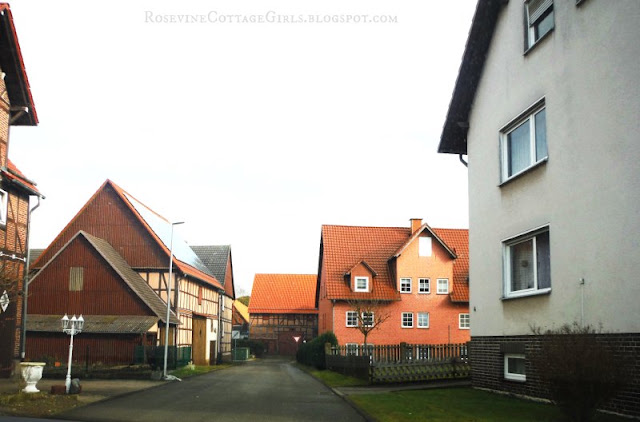
So Join me on my journey walking the streets of my ancestors while I share a little bit about them with you.
Related Post: Wilhelmshöhe Palace Museum Kassel Germany

Istha Germany – A little about my history
My 12th great grandfather Thomas Klopp was born in this town in 1563. He married his bride Elisabeth when he was at 23 years old and she a girl of 21 in 1588.

They started a life together happily having children and making a living in their village working hard and raising children and going to their village protestant church.

Istha Germany in the 40 Years War
1618 saw the beginning of the 40 Years War and Thomas was 61 years old. The Klopp family were Protestants and this war was when Ferdinand III came into power he began to tighten the noose on the Protestants in the land and first he started to limit the freedom of the Protestants to worship outside of the Catholic church.

Slowly it became worse and churches were destroyed and families were fined or imprisoned. Some European countries came to the aid of these Protestant Christians that were being destroyed for their faith. These people lived in constant fear for their lives as they were under an unending threat from Ferdinand’s edicts. Families lived in fear of soldiers that would come and take what little they had forcing them to give money or goods.

Thomas and his wife died in 1624 in the midst of this hardship.
Peace was not made until May of 1648 and even then twenty percent of the German people were dead – over eight million casualties in all. These were times of extreme hardship and widespread famine in Istha and across Germany.

But the family continued work and toil, laughter and tears until the time of their 3x great grandchildren. This would have been my 9th great grandfather Johan Jost Klopp ( Klap) and his wife Anne.

It is August 9, 1669, and little Johan was born in his small village. He grew up in a cottage with his momma and papa and many siblings learning a trade at his father’s knee. His mother died when he was just a boy and sometime later the family relocated. They stayed in that town and he grew eventually he met and married his wife Anna at her home church in another town we will visit soon. There my story will continue.
Until then jump out of the car here at Istha with me and then we will walk the streets of this ancient town that holds my roots.

It took about an hour and 15 minutes to get there. Actually, the day before I went to Kassel in the hopes of catching another train there, but there is no train heading to this small town. I would have had to take a bus there. It would have been another 45-minute trip but I decided to try another way of getting there.
Related Post: Löwenburg Castle – Kassel, Germany

We headed northeast towards Istha Germany, a small town not even on the maps driving through several small towns on a bunch of back roads.

The countryside here is very beautiful, It actually reminds me a lot of home in Tennessee USA, with the green hills. The houses look the same from one town to another it’s as if you entered a town, drove through it and then a couple of minutes later went back through it.

What a feeling to know that I have been walking on the same ground that my ancestors worked on. I could almost picture them walking down the road or riding a cart along the way. I found a church that is from 1836. Sadly the church I was hoping to find is much older than that I didn’t see any other churches. It must have been destroyed in the war.

We stopped at the cemetery hoping to find some old graves but they were fairly new. As we were heading out of the cemetery we found a young lady walking around who happened to speak English.

We asked her if there were any older cemeteries around and sadly there were not. We also asked if there were any people living there with the last name of Klopp, Clopp or Clapp? The last name doesn’t sound familiar to her, so I struck out there. But I got the honor of spending time where my ancestors lived and that alone made the trip worthwhile.


- American Guy in Germany
- 8 Days In Germany
- St Elizabeth’s Church in Marburg Germany
- Marburg, Germany Marburg Castle
- St. Marian’s Church – Marburg Germany
- Traveling Alone – My Third Week In Germany
- Wilhelmshohe Palace and Musiuem Kassel Germany
- Lowenburg Castle – Kassel, Germany
- Hercules Monument – Kassel, Germany
- Kloster Ruin Limburg Monistary Bad Durkhim, Germany
- Hardenburg Castle Bad Durkhim, Germany
- Traveling Germany – Frankfurt
- Dreikonigsgemeinde Church – Frankfurt
- Kassel Hesse Germany part 1
- Frankfurt Germany Fasching
- Amoneburg Castle – Amoneburg Germany
- St Bartholomew Cathedral – Frankfurt, Germany
- Touring Heidelberg, Germany
- Churches of Heidelberg, Germany
- Heidelberg Castle
- Exploring Nuremberg, Germany (part 1)
- Exploring Nuremberg Germany (part 2)
- Churches of Nuremberg – Frauenkirche
- Churches of Nuremberg – St Elizabeth’s
- Churches of Nuremberg – St Jakob
- Churches of Nuremberg – St Lorenz
- Churches of Nuremberg – St Sebald
- Dachau – Concentration Camp
- Victims of Fascism Memorial –
- Neuschwanstein Castle – Swan Castle – Germany
- Simmerath – My Final Days In Germany


